MEV Protection in a Multi-Chain Wallet: Why Simulation Matters More Than a Promise of Privacy
A wallet can protect a transaction from some forms of maximal extractable value (MEV) and still leave the user exposed to other forms of execution risk. That is the counterintuitive starting point. MEV is not a single attack, and “MEV protection” is not a single switch. It is a set of choices about who can observe a transaction, how it is ordered, what the transaction is allowed to do, and whether the user can detect an unfavorable outcome before signing.
For a US DeFi user moving between Ethereum and several EVM-compatible chains, this distinction is practical rather than academic. The same swap may face different ordering markets, liquidity conditions, fee systems, and relay arrangements depending on the chain. A multi-chain wallet therefore has to do more than store keys. It must help the user understand execution across changing environments. Transaction simulation is especially important because it addresses a wider class of problems than front-running alone: wrong token approvals, unexpected contract calls, excessive slippage, and interactions with malicious or compromised contracts.
From public mempools to execution-aware wallets
Early DeFi users often described MEV through a simple image: a pending transaction appears in a public mempool, an automated actor notices it, and another transaction is placed before it. That description captures one important mechanism, but it is incomplete. MEV refers more broadly to value gained by controlling or influencing transaction inclusion, ordering, or execution. Arbitrage, liquidations, back-running, sandwich trading, and certain forms of failed-transaction competition can all fit within that wider category.
The historical development matters because the response has changed. At first, users mainly adjusted gas prices or tolerated slippage. Those tools were crude. A higher fee might improve inclusion but could also make a transaction more attractive to competing bots. A generous slippage limit could increase the chance of execution while simultaneously giving a sandwich strategy more room to extract value. Later, private transaction channels and specialized order-flow systems emerged, attempting to reduce public exposure or improve execution quality.
These tools reduce particular risks, but none changes the underlying fact that a signed transaction is an instruction sent into an adversarial, competitive environment. A private route may limit visibility before inclusion, yet it cannot make an unsafe contract safe. A low slippage setting may reduce sandwich losses, yet it can increase the probability of reverting during volatile conditions. Protection is therefore best understood as risk reduction under specified assumptions, not as a guarantee.
The case of the cross-chain DeFi user
Consider a user in the United States who holds assets on Ethereum, an Ethereum layer-2 network, and another EVM chain. The user wants to swap a stablecoin, bridge part of the proceeds, and deposit the remainder into a lending protocol. In a single session, the user may approve a token, invoke a router, interact with a bridge contract, and later supply assets to a protocol. Each action has a separate transaction context, even if the wallet presents them as one coherent objective.
Suppose the user focuses only on sandwich protection. The wallet may help route the swap through a less exposed path, but the user could still approve an unlimited token allowance to an unfamiliar spender. The bridge transaction could target the wrong destination contract. The lending deposit could produce a result different from what the user expects because of a changed exchange rate or a contract parameter. In this case, the largest loss may not come from MEV at all. It may come from signing an instruction whose economic meaning was not understood.
This is why transaction simulation is a central security feature for DeFi rather than a decorative convenience. A simulation estimates how the state would change if the transaction were executed under the current conditions. A useful wallet can translate that result into human-relevant signals: which assets leave the account, which assets arrive, whether an approval changes, which contract is called, and whether the transaction appears likely to fail. The result is not a prophecy. Blockchain state can change between simulation and inclusion. It is, however, a valuable pre-signing inspection.
What MEV protection can and cannot do
MEV protection generally operates at several layers. The first is transaction visibility. If an order is not openly broadcast to the ordinary public mempool, some observers may have less opportunity to construct a competing transaction before it is included. The second is execution design. Limit-style controls, routing choices, and bounded slippage can reduce the amount a user is willing to sacrifice. The third is wallet interpretation: showing the expected consequences before the private key authorizes the transaction.
These layers address different failure modes. A private submission path primarily concerns who sees the order and when. Slippage controls concern the price range in which execution is acceptable. Simulation concerns the transaction’s intended and projected effects. Treating them as interchangeable leads to poor decisions. A user may need all three, but each remains subject to different limitations.
For example, a private route can fail to provide meaningful protection if the transaction is later exposed, if the chosen builder or relay has different incentives, or if the strategy itself reveals enough information through related activity. Conversely, public submission is not automatically irrational: a small, highly liquid trade with strict execution bounds may have limited economic exposure, while a private route may introduce additional reliance on infrastructure. The correct choice depends on value at risk, urgency, chain conditions, and the trust assumptions the user accepts.
Simulation has its own boundary. It usually evaluates a possible execution against a particular snapshot or node view. It cannot guarantee that liquidity, oracle values, gas conditions, or contract state will remain unchanged. It may also struggle to communicate complex economic consequences, especially when a protocol uses indirect callbacks, upgradeable contracts, or interactions spanning multiple systems. A warning should prompt investigation, not automatic panic; an absence of a warning should never be treated as proof of safety.
Why multi-chain design raises the security standard
Multi-chain wallets are often described as making access simpler. The trade-off is that they also compress several distinct security environments into one interface. Chain identifiers, native gas assets, token representations, bridge contracts, and deployment addresses can differ. A familiar token symbol does not prove that two assets are issued by the same entity or secured by the same mechanism. Even when two networks use the EVM, their liquidity and transaction-ordering conditions may be materially different.
A security-aware wallet should therefore make context visible at the moment of decision. The user needs to know the active network, the contract being called, the asset movement, and the permissions being granted. This is particularly important for approvals. An approval is not merely a preliminary click; it can grant a spender the ability to move tokens later, subject to the allowance. Limiting approvals where practical, reviewing the spender, and revoking unused permissions are complementary controls to MEV-aware execution.
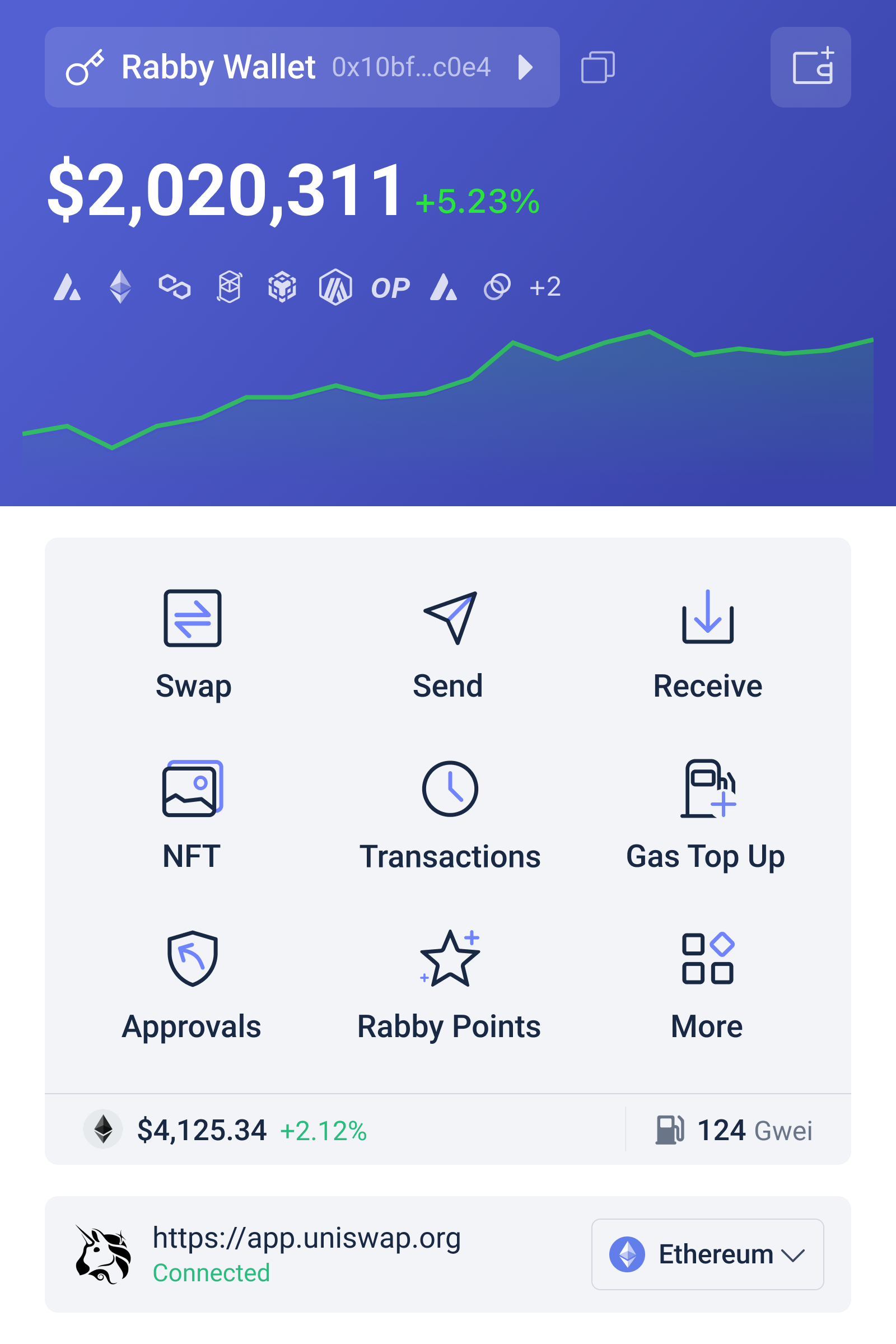
This is also where an advanced wallet such as rabby can be useful to DeFi participants who move across Ethereum and EVM networks. Its value should not be judged by a slogan such as “secure by default,” but by whether its review and simulation features help users identify the economic meaning of a transaction before signing. The important product question is not whether a wallet eliminates adversaries. It is whether it gives the user better information and safer decision points.
A practical framework for evaluating a transaction
Before approving a high-value DeFi action, users can apply a compact four-part review. First, identify the action: swap, approval, deposit, withdrawal, bridge, permit, or contract interaction. Second, inspect the balance changes: what should leave the wallet, what should arrive, and what should remain unchanged? Third, examine permissions: does the transaction authorize future spending, and is the spender expected? Fourth, assess execution conditions: is the slippage bound reasonable, is the route public or private, and could the transaction be delayed or reordered?
This framework improves on the common question, “Is this transaction safe?” Safety is not binary in this context. A transaction can be technically valid but economically unfavorable. It can be protected against public mempool observation but still grant excessive permissions. It can be simulated successfully but fail later because the state changed. The more useful question is: “What risks does this transaction reduce, what risks remain, and am I comfortable with those assumptions?”
For larger trades, the framework also supports staged execution. A user might test a new route with a small amount, use a bounded approval, confirm the expected balance changes, and only then increase the position. This does not remove smart-contract or bridge risk, and it may create additional fees or price movement. Yet the cost of a small test can be rational when the alternative is committing substantial capital to an unfamiliar contract path.
What to watch as wallet infrastructure evolves
The next phase of wallet design is likely to focus less on isolated warnings and more on transaction intent. Instead of showing only raw calldata or a generic risk label, wallets may increasingly help users compare the requested action with the action they believe they are taking. That direction is promising because many losses originate in a mismatch between human intent and machine-readable instructions.
The unresolved issue is how much trust users should place in simulation providers, transaction decoders, private routing systems, and external risk signals. Better interfaces can reduce mistakes, but they also create a risk of overreliance. If the interface presents a green result with excessive confidence, users may stop questioning assumptions. The strongest design is therefore not one that hides complexity entirely. It is one that compresses complexity while preserving the details needed for informed judgment.
Frequently asked questions
Does MEV protection prevent every sandwich attack?
No. Private submission, execution limits, and routing choices can reduce exposure to some sandwich strategies, but coverage depends on the chain, the submission path, the liquidity, and the transaction’s structure. Protection is conditional rather than absolute.
Why is transaction simulation relevant if I already use private transactions?
Private submission primarily addresses visibility and ordering before inclusion. Simulation addresses what the transaction is expected to do, including asset transfers, approvals, and likely failures. These are different risk categories, so one does not replace the other.
Can a multi-chain wallet make bridges safe?
No. A multi-chain wallet can make network selection, contract review, and transaction consequences easier to inspect, but bridge security depends on the bridge’s contracts, validators or messaging assumptions, liquidity, and operational controls. Wallet clarity reduces user error; it does not remove protocol risk.
The central lesson is simple but easy to miss: MEV protection is strongest when treated as part of a broader execution-safety process. The user is not only defending an order from bots. The user is deciding whether a machine-readable instruction accurately reflects an intended economic action. In a multi-chain DeFi environment, simulation, permission review, bounded execution, and careful routing work together. None is sufficient alone, but together they create a more realistic form of protection: not immunity from adversarial markets, but better information before commitment.